Community Spotlight
Interview with Sarah Greene
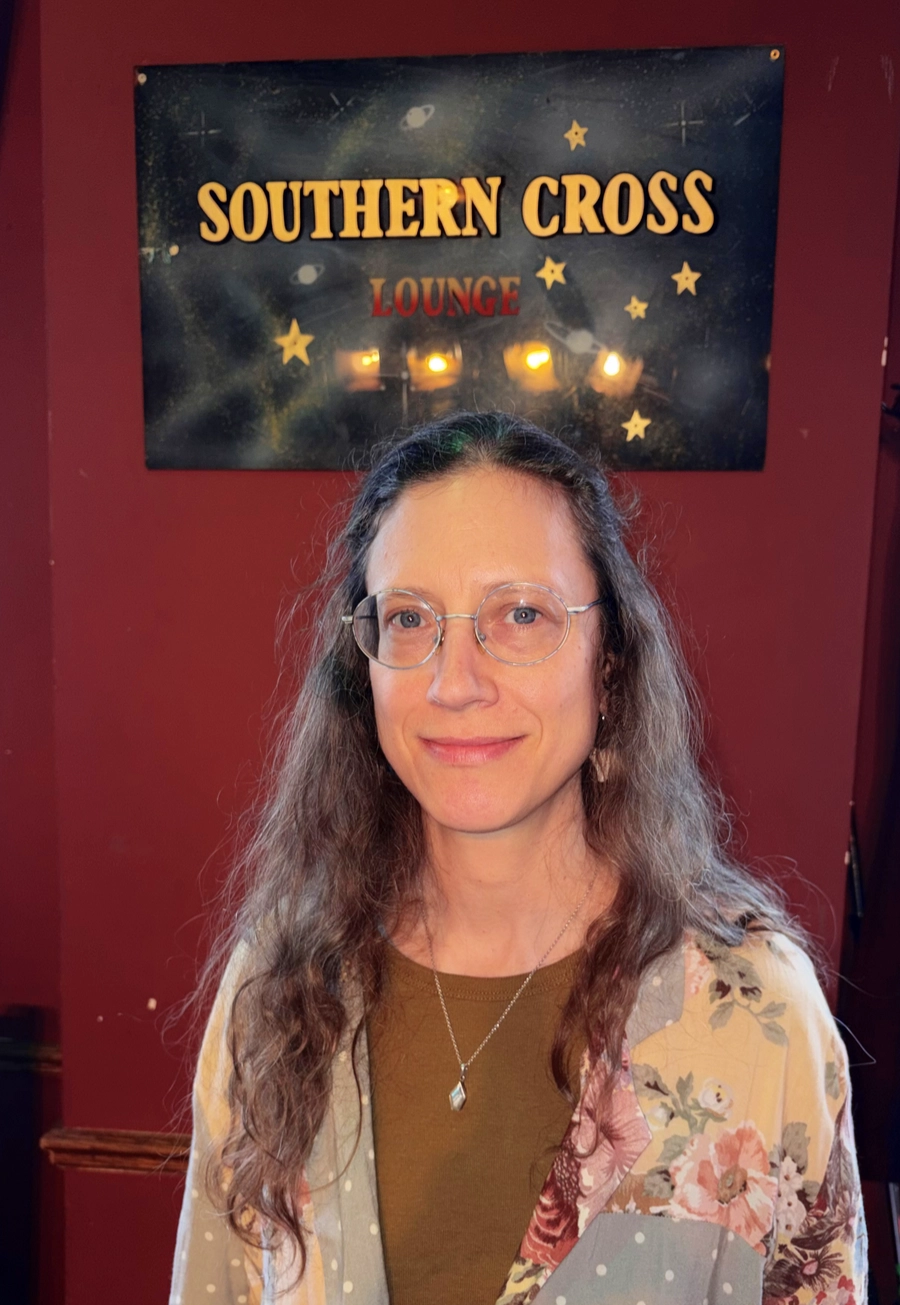
Sarah Greene is the Director of Residency Programs at Tranzac (a not for profit venue in the Annex) and has also worked with Folk Canada (on the Folk In Film Festival and Community Folk Festival) and Bloor Annex BIA (on its Summer Music Series). A former music journalist (for NOW Magazine, Exclaim!, The Coast and other publications), Greene released two recordings as the front woman of mid-2000s indie-folk band The Pickups before putting out her debut solo album, Toronto Blues, in 2011. Her sophomore album, Being Real, is due out this year.
JIT: When and How did you first get involved with TRANZAC and how has your role changed over time?
SG: I wish I could remember when exactly I first stumbled through the door; I used to hang around at The Green Room (now the Annex Hotel) wondering what the Tranzac was; it was probably towards the end of my time at U of T or just after I graduated when I discovered Tranzac as an audience member (maybe the Django nights initially); and when I was in a band in the 2000s (The Pickups) Tranzac’s Southern Cross was a revelation to me in that it was a non-bar like public space that you could do an intimate show, with no stage or real barrier between the musicians and audiences. I had some of my first more acoustic shows in the Southern Cross, which is a funny trajectory – I went from playing places like Sneaky Dee’s (thank you Shaun Bowring) to playing a place that felt more like my living room.
I do remember that some of the earliest shows I saw at Tranzac were Rock Plaza Central. I think I’ve been a regular at Tranzac now for — wow — about twenty years. There was a two year gap in which I was in Halifax studying journalism; Tranzac was one of the things I was homesick for when I was in Halifax, and also served as an anchor/musical home/cushion when I returned to Toronto, missing the east coast a lot.
I have heard a number of Tranzac artists say Tranzac is one of the main reasons they have stayed in Toronto. It’s in a Weather Station song; just the knowledge you can go there, any night of the week, and be in community, hearing music, feeling inspired.
That explains how I discovered Tranzac initially; but my involvement was more gradual – when I came back to Toronto in the early 2010s I began to sub in as one of the hosts of Tranzac’s weekly open stage on Monday nights; and I would pitch in/volunteer to help out for Tranzac’s NYE party, when Robbie Luster was booking. I started to work at Tranzac in 2013 as a bartender, and did that alongside my freelance writing until 2017 when I began coordinating Tranzac’s annual holiday craft fair (which has not happened for a few years now); I think it was the first time I realized I could organize and schedule a lot of people; which as you know is part of the booking process.
In early 2018 I began booking the two front rooms, coordinating memberships, and updating the website; for a long time my role was a hybrid of communications and programming – I wrote and edited the weekly newsletter for many years before handing it off to Blair MacMillan, who’s now Tranzac’s communications lead.
Tranzac has three rooms (The Main Hall, Living Room and the Southern Cross) and we have divvied up the booking duties various ways over the years (post pandemic I had a stint of booking all three rooms, managing rentals) but currently I handle Tranzac’s residency program, visual arts shows, and one off events in the Southern Cross; and Sara Constant (rentals@tranzac.org) coordinates rentals.
For the last 3-4 years Tranzac has been doing open calls for our monthly performance residency program in the Southern Cross; and, since last year, for visual art shows at Tranzac. That’s been (and continues to be) a learning process for me; facilitating juries and helping artists navigate the process, which continues to evolve.
JIT: TRANZAC provides a unique service to Toronto as a non-commercial space where art and community are valued more than profit. Can you expand on this and how this affects your role as programmer?
SG: During the pandemic many of the artists and attendees who love Tranzac wrote us support letters to help us secure funding and survive; one of the things that comes up again and again in these letters is the idea that it’s a special place where musicians can feel free to experiment and/or be weird (and I’ll add as a folky here – also be quiet and/or vulnerable) without the usual or common pressures of bar sales/ticket sales/rental costs.
Tranzac is almost like a community radio station or a community centre – we have a cozy space, gear/backline that artists can use, and musicians who play Tranzac regularly, in particular, residency artists, have the chance to try different iterations of a project over and over, every month, adding new material, inviting guests, bringing in new collaborators. It’s really wonderful to watch musicians and musical projects, and musical communities cross-pollinate and grow; and the Southern Cross in particular (though Tranzac in general) is also really conducive to inter-generational projects.
Tranzac is a not for profit, which is unusual for a venue (though the joke amongst other small venues that are technically for profit is that they too are sort of not for profit); but I don’t want to make it sound as though Tranzac exists in a bubble unaffected by inflation and gentrification; we do think about attendance and bar sales; but I try to balance that in my work by prioritizing musicians and artists and the music (and art, dance, theatre, poetry, etc) they do, as they are the Tranzac (or they are what gives the place meaning – what the musicians and artists and audiences create together daily).
JIT: What are some of the most memorable evenings you have experienced at Tranzac over the years?
SG: This is where I might need to confess that as a writer I worry a bit that I might have a terrible memory; every single day at Tranzac has some magic but some big moments for me have been when Michael Hurley played the Main Hall with Darren Hanlon in September of 2018 (organized by Jay Pollard, who managed to bring Snock to town a few years in a row I think); when Julie Doiron played my guitar at the open stage in the Southern Cross (when she was teaching yoga up the street); and when Joan Shelley, Nathan Salsburg and Jake Xerxes Fussell came to a tiny show in the Living Room to hear Tamara Lindeman play some new songs in 2019.
I also fondly remember Joe Hall’s afternoon residency in the Southern Cross with the Continental Drift; and Sam Larkin’s weekly presence at the table near the piano during the open stage, back when it was sparsely attended (it’s very popular now); Bob Wiseman is hosting a Sam Larkin tribute Tues June 23.
Other highlights: Sandro Perri (every time) but in particular a show in 2019 when Sandro’s band played the most exquisite version of “Wrong About The Rain”; more recently John Southworth’s residency in the Southern Cross, which ambitiously featured a serious attempt to never repeat any songs; Holy Oak Family Singers (every month; but perhaps especially Toronto Does Toronto); and the Silt’s recent – awesome – reunion in the Southern Cross.
I’ve watched some great shows from up in the lighting booth – including Jennifer Castle’s solstice show December 2024 (any time I’ve got to hear Jennifer, Victoria Cheong/New Chance and Isla Craig, in any combo, has been amazing).
I love the events – regardless of which room – in which people come together to support an artist in, for example, the launch of a book or album. I think we create a little village this way and Tranzac’s Southern Cross or Main Hall are almost like the town square.
And the concept of Tranzac (because it’s a community, not just a building) extends out beyond the Tranzac, to for example, events put on by TONE Festival or small, experimental (or folk) shows at Sellers & Newel, 918 Bathurst or the basement of Wenona (Track Could Bend) and probably far beyond.
JIT: If someone wishes to be considered for a gig at the Southern Cross Lounge, what are you looking for?
SG: I think I’m looking/listening for something that sounds genuine, curious, and musical (sorry that’s vague – but I think you can feel it in your bones when you hear that, regardless of genre); it doesn’t have to be polished; but ideally it should fit within our programming, which is a mix of jazz/improvised music, folk, singer-songwriter, indie, experimental, and multi-genre, it’s pretty open.
Southern Cross is a listening room, and it’s a small space, so partly I’m checking to see whether the project is a fit for an intimate, DIY, non-mainstream, non-commercial space.
I think people make the mistake of giving too little and/or too much info in gig inquiry emails – I really appreciate a link to bandcamp/soundcloud or YouTube; or anywhere I can stream a sample of music (not Spotify!) and a short paragraph of context – what the project is, what your relationship to Tranzac is (if any); and when (ideally) you’d like to perform.
Because we’ve expanded our residency program, there are not a ton of open slots in the Southern Cross right now; but I keep an ongoing list of fill ins, in case someone is away; and if you reach out further in advance it helps.
JIT: Tranzac offers monthly residencies for artists, which are decided by jury. For artists who wish to apply, what advice can you offer for a successful application?
SG: You asked what advice can I offer for a successful application and I think for Tranzac’s performance residency (and any festival, residency or grant you apply for) we may need to redefine “success” because for Tranzac’s Southern Cross residency program the acceptance rate for new residencies is approximately 1 in 5 right now, and there are lots of great projects and strong applications that do not get accepted, just because of the limitations on time slots (there are approx 23 or 24 six months residencies at a time); what I mean with these processes in general is that sometimes you get a yes, and sometimes a no, and that can vary over time so don’t give up. It’s a process you only have so much control over.
Strong applications tend to have good samples of work (including a live video) and a clarity of vision of what you intend to do over 5 or 6 months. The level of detail varies but typically successful applications are able to speak to the impact the residency will have not just on the artist/group who is applying but also their collaborators, guests, audience, community, and sometimes practice/knowledge sharing.
In general the Southern Cross lends itself to generosity – artists sharing the space with other artists to help amplify other voices. It’s also good for workshopping new material in front of audiences; a number of recent residencies have coincided with an artist or band developing material for a new album while deepening their live performance practice.
Write in your own words; situate yourself and your practice with wherever you are in your journey; introduce yourself and list your collaborators (the jury may or may not be familiar with your work); let the jury know why you think the Southern Cross would be the right space for your residency; and why this is a good time for you to do the residency. You can speak to how your idea fits within an existing tradition at Tranzac or how it’s something Tranzac needs more of; and whatever barriers you may have faced finding space to perform in.
JIT: Does being an artist yourself affect your role as a programmer, and if so how?
SG: I feel a strong pull towards advocating for artists, not just at Tranzac but in general. When I go and play shows at other venues and in other places, I take notes about ways we can better support artists at Tranzac. It’s sort of the same wheel everywhere but yet people are constantly reinventing the wheel – venues and musicians, making it work.
I think my background in radio affects my role as programmer a bit – I’m thinking of the overall symphony of the three rooms when they are all happening at once, and the space over time (a week, a month, a year). When it’s flowing well it’s basically a festival.
JIT: If you could change something about Tranzac, what would it be?
SG: I’d create three more rooms for performance (only partially kidding there); I’d like to get to the point where we can make daytime use of the space for rehearsals free to residency artists or more affordable (it’s $25/hour right now – not bad); and create more opportunities for different communities at Tranzac to meet each other, learn from each other and collaborate (Tranzac Club Night – once a month in the Main Hall – is one such opportunity).